Materials & Products
Woven Basket Materials Compared: Cotton Rope, Paper Rope, Seagrass, Rattan and Felt
Cotton rope, paper rope, seagrass, rattan and felt compared on look, shape, loading and price per unit — plus which market buys which material.
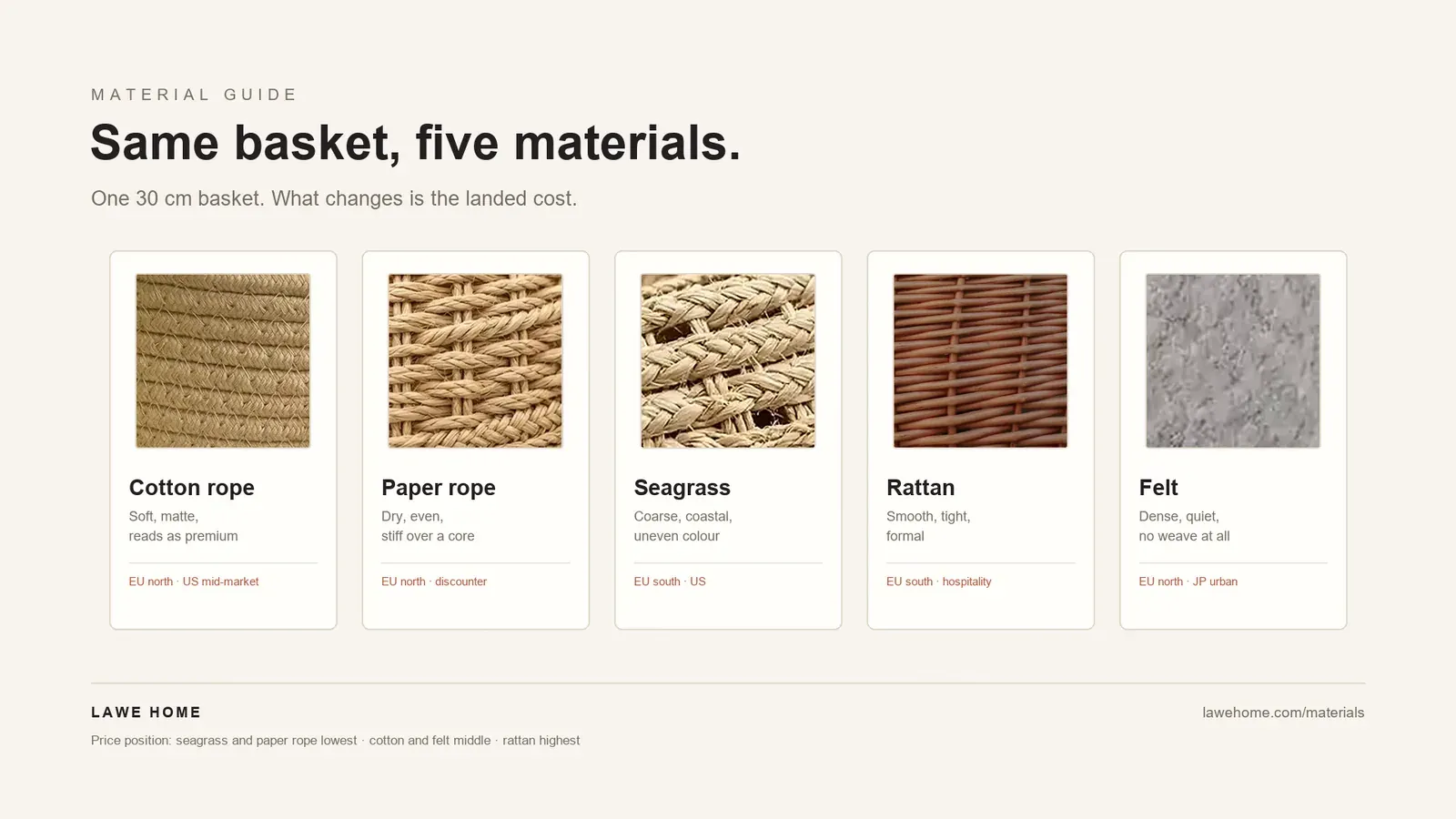
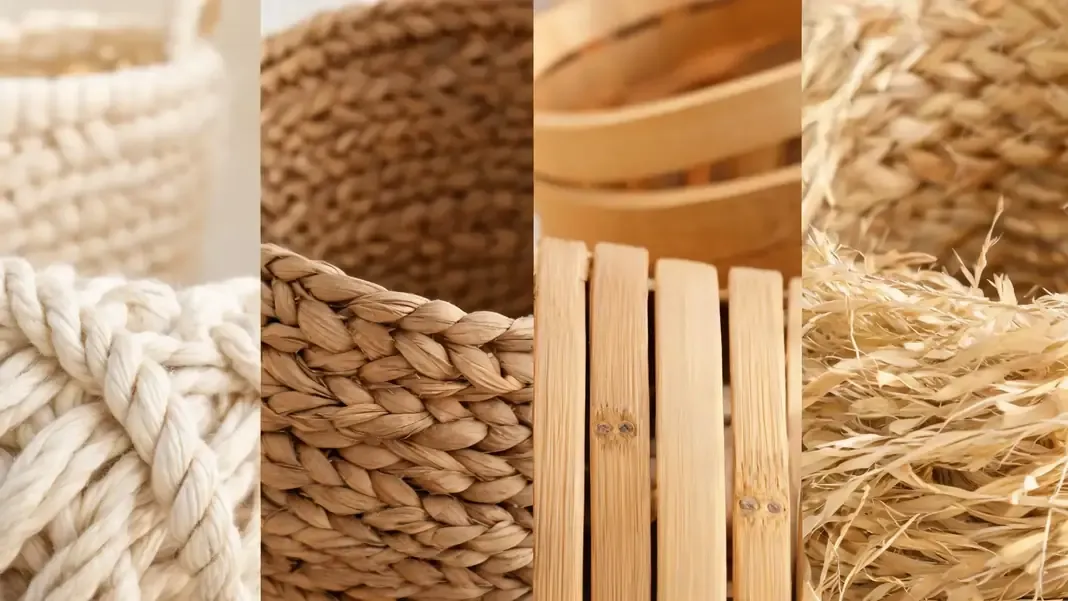
Five materials sit behind most woven baskets on a shop shelf: cotton rope, paper rope, seagrass, rattan and felt. They differ in four things that decide your shelf price and your freight: how they look, how they hold a shape, how they load, and what they cost per unit.
This is the comparison we send before a first order.
The Short Comparison
Material | Look and hand-feel | Shape and strength | Loading |
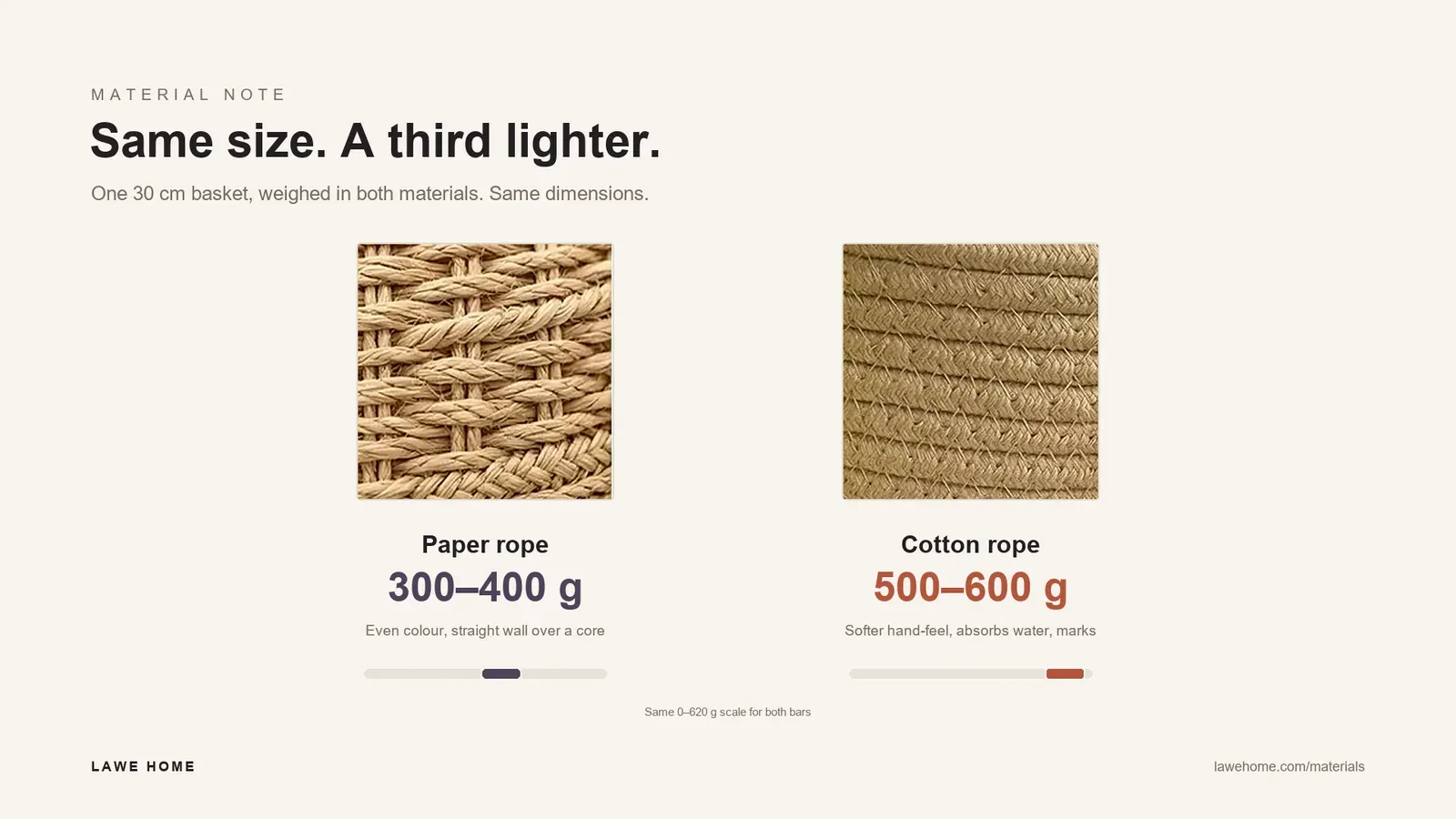
Cotton rope | Soft, matte, reads as premium | Held by stitching, no frame; softens under load | Nests, heavy per unit |
Paper rope | Dry, even, papery | Stiff, especially over a wire core | Nests, light per unit |
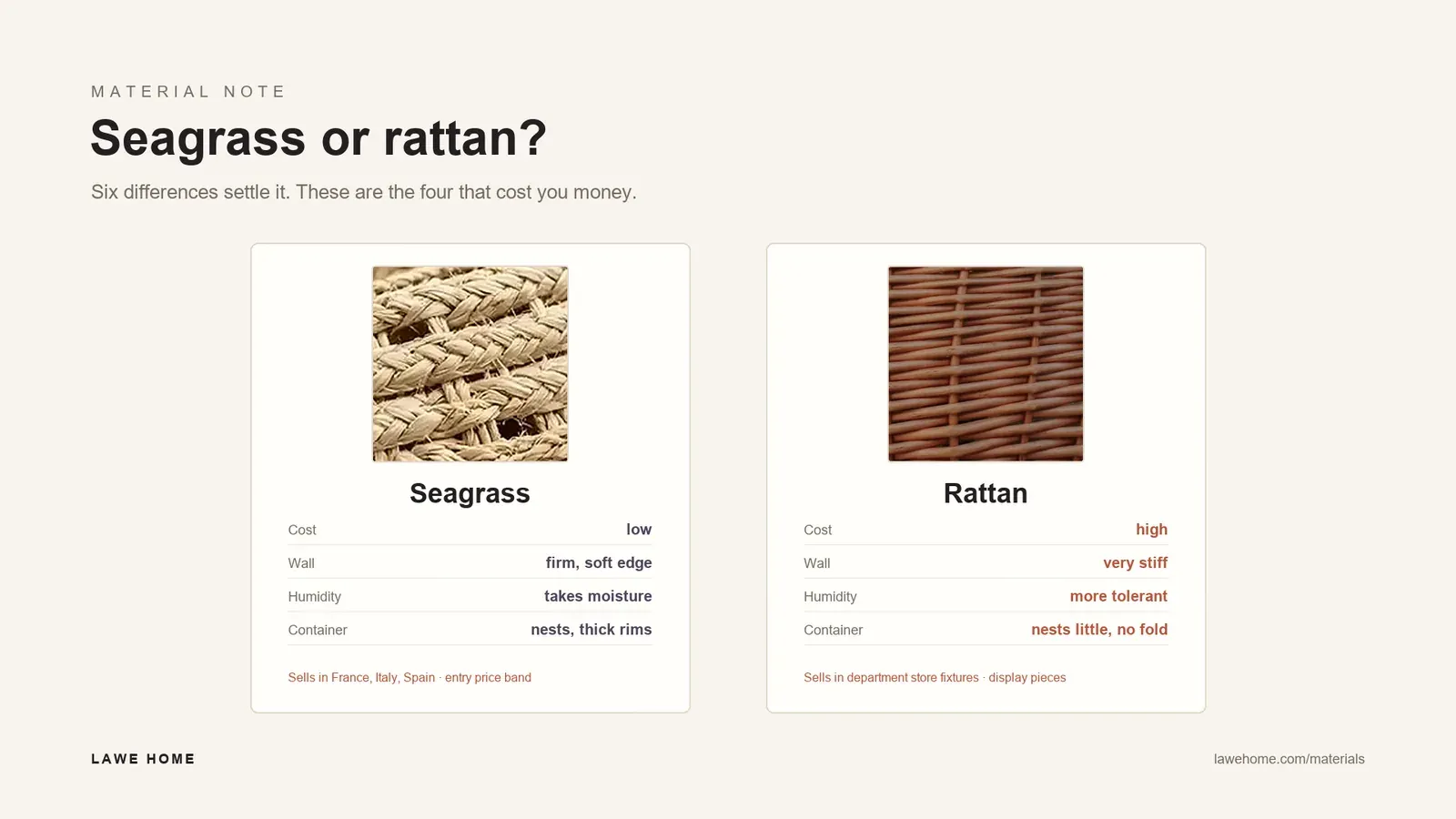
Seagrass | Coarse, coastal, colour shifts between batches | Firm wall, very little give | Nests, every rim costs height |
Rattan | Smooth, tight weave, formal | Stiff, takes load well | Nests only slightly, never folds |
Felt | Dense, quiet, furniture-like | Holds only over a stiffener | Folds flat |
Price position runs in the same order every season. Seagrass and paper rope sit lowest. Cotton rope and felt sit in the middle. Rattan sits highest per unit, because the material costs more and the weave takes longer.
That ranking moves with size and construction. A large felt hamper can cost more than a small rattan basket. Treat it as a starting point, not a quote.
What Each Material Decides
Cotton rope. The heaviest of the five and the most forgiving to touch. No frame inside: the coils are cross-stitched to each other, and the stitching is what keeps the wall upright. Gauge does the rest — 4 mm reads as utility, 6 mm and above as premium. With nothing rigid behind it, the wall softens under load and the rim bows; a tall basket left empty leans. It also absorbs water, so a humid warehouse shows on the surface first. Best where the basket is handled by the customer, not a forklift.
Paper rope. Light, even in colour, and cheap to ship. Over a wire core it holds a straight wall and a crisp rim, which is why it copies the look of a rigid basket while folding nothing like one. Damp is its weak point: the paper loses strength before it discolours.
Seagrass. The most textured of the five, with natural colour variation that buyers either want or reject. Walls stay firm because the fibre is stiff. Rims are thick, so nesting saves less height than it does with cotton. It is the easiest material to sell in a photograph and the hardest to keep consistent across repeat orders.
Rattan. Smooth, tight and formal. It carries load without a frame and keeps its shape through transit. The cost is volume: rattan nests only slightly and never folds, so the same unit count takes more container space than any other material here. We source rattan on request rather than holding it as a standing line.
Felt. A non-woven sheet over a stiffener. It folds flat, loads densest, and looks like furniture rather than storage. Colour is the easiest of the five to control, which makes it the safest choice for a private-label range that has to match a printed lookbook.
Material Follows the Market
What we see across orders, by destination:
Market | Materials that sell | Why |
Germany, Netherlands, Nordics | Paper rope, felt, undyed cotton | Calm palette, recyclable packing story, shelf consistency |
France, Italy, Spain | Seagrass, rattan | Texture and warm colour carry the display |
UK, US mid-market | Cotton rope, felt | Premium feel at a mid price point |
Japan, Korea urban retail | Felt, small cotton rope | Fits small apartments, muted colour |
Discounters, supermarket programmes | Paper rope, PP&PE | Landed cost per unit is the whole brief |
Two of these can be true for one buyer. A German discounter wants paper rope at a discounter price, which is a different construction from the paper rope basket sold in a department store.
Loading Is a Material Decision
Felt and canvas fold flat. Paper rope, cotton rope and seagrass nest. Rattan nests a little and never folds.
On a 4,000-unit order the difference is containers, not percentages. We covered the arithmetic in our note on container space, including how much moisture protection each fibre needs on a 30–40 day route.
What We Hold in Range
Twelve materials, in four families: rope (cotton, paper), natural woven (seagrass, cattail, bamboo), fabric (canvas, felt, chenille, corduroy, imitation linen), and plastic or wire (PP&PE strap, iron wire). The last family is not a fitting. A woven PP basket and a wire mesh basket are products in their own right, sold the same way as the rope ones. Rattan and willow we source to order.
Sampling runs 7–10 days from a confirmed spec. MOQ starts at 100 pieces per colour. Send a reference photo and a target price and you get feasibility and a quote within 24 hours.
Frequently Asked Questions
Which of the five is cheapest landed?
Paper rope and seagrass, usually. Paper rope wins on freight because it is light; seagrass wins on material cost. Which one lands lower depends on your duty rate and how the basket nests.
Which survives a humid warehouse best?
Felt, then paper rope with a coated core. Seagrass and cotton rope both take up ambient moisture. If your warehouse is unheated, plan for it at the packing stage rather than after arrival.
Can one order mix two materials?
Yes. Mixed material orders are common for buyers testing a new fibre against a proven one. Keep them in separate cartons so the loading plan stays readable.
Can you dye to a Pantone reference?
Yes, on cotton, paper, felt and canvas. Natural fibre takes dye unevenly, so we send a dyed sample for approval before bulk. Expect a small batch-to-batch shift on seagrass and cattail no matter what we do.
Not sure which material fits your market? Send your product list and target retail price — we'll come back with two or three options and the cost difference. → contact us
Our full material range sits on our materials page, with finished products grouped in our collections. For the sustainability side of the same question, read our note on natural materials. Ordering questions are answered on our FAQ page.