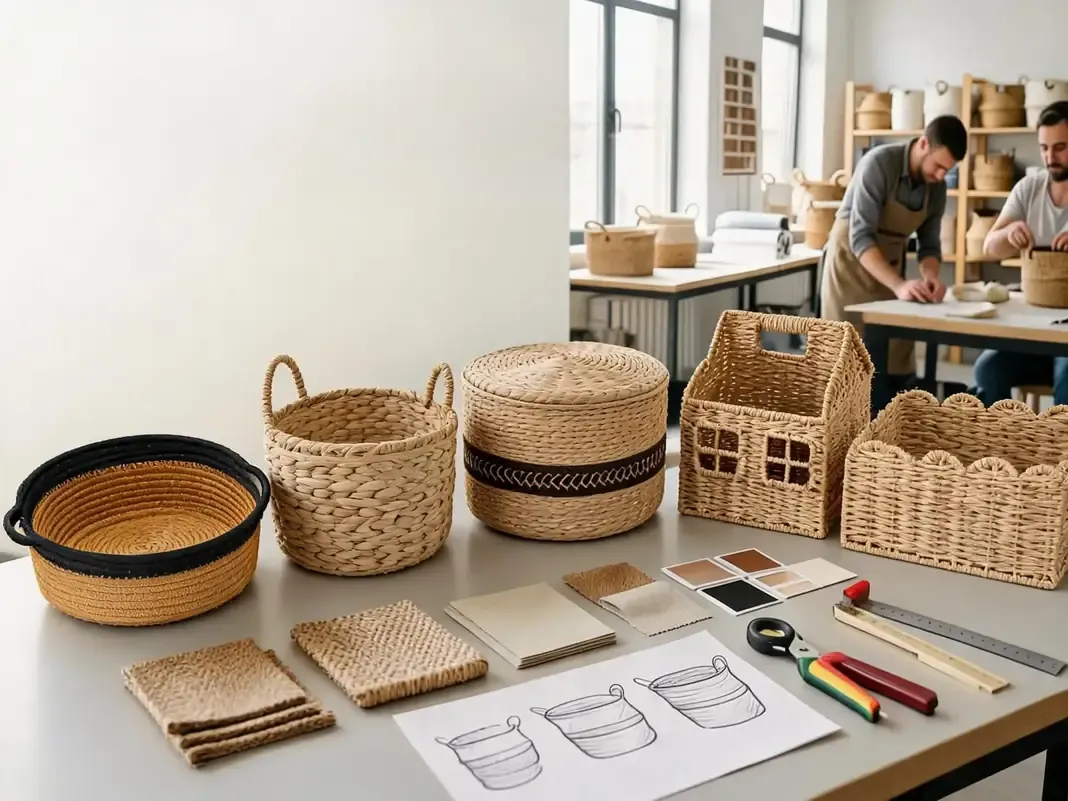
Custom Development
Who Are You Really Selling To? How Market Positioning Shapes Product Spec
The same product idea can need two different specs. How market position decides size, structure, fabric and colour — with the derivation table we use.
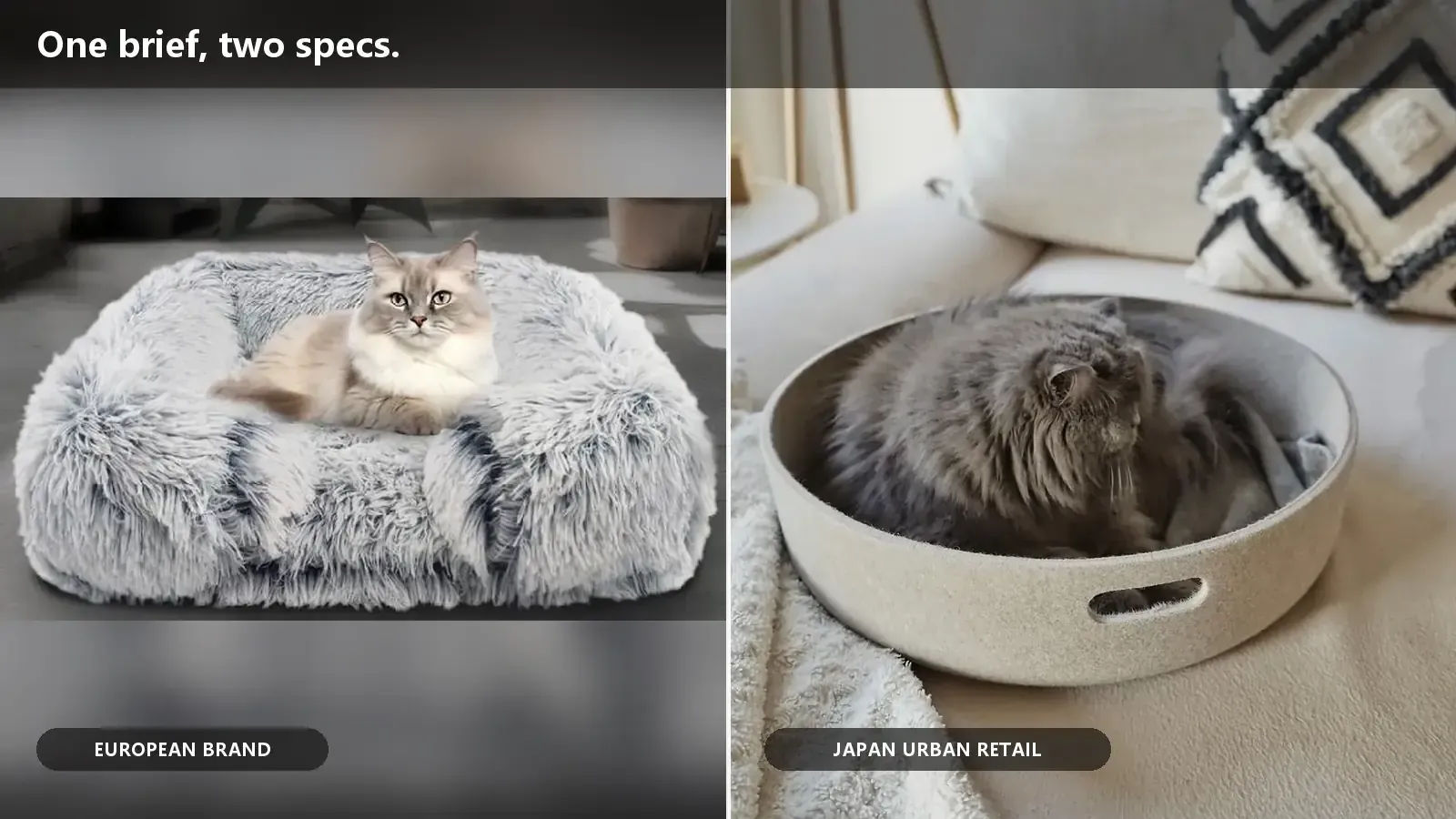
Two buyers can ask for the same kind of product and need two different ones. A reference photo fixes the look. It does not fix the size, the structure, the fabric, or the colour — those come from one question: who walks past this on the shelf?
This is the derivation we run before quoting any custom item. Here is how it works.
One Reference, Two Specs
Take one felt pet bed as the reference.
A European home brand sends it with one sentence: it has to read like furniture. Their buyer wants it in the living room, next to a sofa, in a catalogue shot with oak floors. The spec that follows: a large footprint, a low rim the dog steps over, a base firm enough to keep a clean line, undyed felt, colours pulled from a neutral palette. Nothing about it can look like an accessory.
A retailer in a Japanese city sends the same photo with a different sentence: their customers keep pets in small flats. The spec that follows: a compact footprint, a structure that folds flat for delivery and for storage when the owner is out, colours in soft, low-saturation tones that disappear into a small room. The living-room shot is not their context. The ten-square-metre room is.
Same reference. Two different products. The difference was never the look — it was who buys.
From Position to Spec: The Table We Fill In
Every custom enquiry starts with five facts about the market. Each one narrows the spec.
If your positioning says… | The spec decides… |
Where it lives in the home | Footprint and height. Living room wants presence; hallway and under-desk want a low profile. |
The shelf price band | Material family and construction. A discounter price cannot carry a stitched coil build; a premium price should not ship a loose one. |
Who handles it | Weight, edge feel, cleaning. A product a customer picks up in-store behaves differently from one that ships in a sealed box. |
How it reaches the shelf | Foldable, stackable or rigid — and the carton that follows from that. |
The brand story | Material and colour system. A recyclable story and a premium story lead to different fibres even at the same size. |
No single line is decisive on its own. The point is the order: positioning first, parameters second. Buyers who send a spec before a positioning sentence usually get a quote for the wrong product.
The Same Logic in Storage Baskets
The pet bed is the clearest example, but the same derivation runs on our core range.
A paper rope basket built for a European discounter and one built for a department store can share a photograph. The discounter version drops to a lighter gauge, a simpler rim, a colour straight from stock. The department store version adds a liner, a heavier base, a colour matched to a Pantone reference. We covered what that choice does to weight and freight in our material comparison.
When a buyer tells us the market first, we can shortlist two or three constructions from stock patterns and quote inside a day. When we get only dimensions, the quote takes longer and lands less accurately — because every missing positioning fact has to be guessed.
What a Positioning Sentence Looks Like
The derivation only needs a sentence, but it needs the right one. These four lines are enough for us to shortlist constructions and quote inside a day:
- "For German discount retail, 30 cm, has to nest hard and land under a set price."
- "For a Japanese urban shop, it folds away every morning and disappears visually."
- "European brand catalogue, it sits next to oak furniture and cannot read as an accessory."
- "US mid-market gift set, the customer carries it to the till — hand-feel decides."
Notice what none of them contain: dimensions beyond one number, fabric names, or a drawing. Those get decided with us, in the order the table sets out. A brief that opens with the market can change material, gauge or construction without restarting the quote — the target has not moved.
Where the Spec Gets Locked: Sampling
The flow is the same for both products:
- You send a reference photo, a sketch, or a sample photo — plus a target retail price.
- We come back with feasibility and a quote within 24 hours. This is where the derivation table gets filled in, in writing.
- A sample follows in 7–10 days from a confirmed spec.
- You check the sample against the positioning, not against the photo.
Three checks matter more than the rest on the sample:
- Measure it. Footprint and height against a tape, not against the render. Large items grow optimism on screen.
- See it under shop light. Undyed felt and natural fibre shift tone between a daylight office and a warm retail fixture.
- Work the structure. Fold it, stack it, step-load the base. A fold that works in the drawing can fight the fabric weight on the table.
MOQ starts at 100 pieces per colour, so the confirmed sample is a real production decision, not a prototype round.
Frequently Asked Questions
Can you work from a competitor's sample?
As a reference, yes. We spec to your positioning and your price band rather than copying the sample, because the competitor built theirs for a different shelf. Tell us what your market needs and where the reference falls short.
We sell in two markets. One spec or two?
Usually two, and the difference is rarely cosmetic. The markets disagree on size, colour and structure more often than they agree. Two specs share tooling and material more often than buyers expect, so the second spec usually costs less to add than the first.
What do you need from us to start?
A product list, a target retail price per item, and one reference photo or sketch. That is enough for feasibility and a quote within 24 hours.
Send your product list — you get a feasibility reply with two or three construction options and the cost difference between them. → contact us
The step-by-step version of the development process is in our OEM & ODM walkthrough, and the custom request form sits on our custom design page. Our material range, including the fabric line used in the pet beds above, is on our materials page.