Custom Development
From Product Idea to Production: How OEM & ODM Homeware Works
OEM or ODM? What each one costs you in time and control, the seven steps from brief to shipment, and the four points where development projects slip.
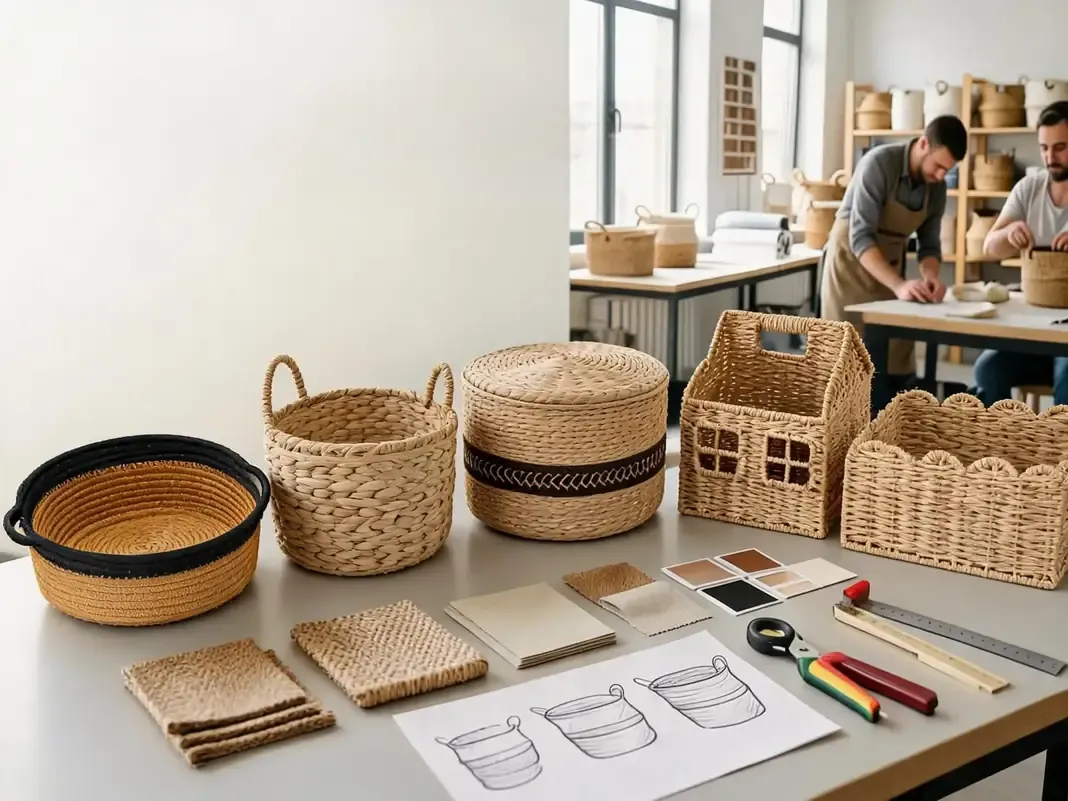
Every development project answers one question early: how much of the design is yours and how much already exists.
That choice decides your timeline, your cost and your level of control more than anything else in the project. This page covers what OEM and ODM actually mean in homeware, the seven steps from brief to shipment, and the four points where projects usually slip.
OEM, ODM, and the Space Between
OEM means the product is made to your specification. You bring the design, or a clear idea of it: size, material, colour, construction, logo, packaging. The supplier builds to your brief.
ODM means you start from an existing design and adapt it. Colour, size, material, logo and packaging can change. The base construction already exists, which is why ODM moves faster.
In practice, most homeware projects sit between the two. A buyer arrives with a rough idea and a reference image. Part of it exists already, part of it does not. That middle ground is where most work happens, and it is the reason to have the conversation before choosing a path.
Three questions decide it:
Question | Points to |
Do you have a specification you will not change? | OEM |
Is speed to market the main constraint? | ODM |
Do you need a construction that does not exist yet? | OEM, with sampling |
There is no quality difference between them. OEM and ODM describe where the design comes from, not how well the product is made.
The Seven Steps From Brief to Shipment
This is the actual sequence we run, with the points where your input is needed.
1. Brief. You send product, size, material, colour, quantity and target market. A photo or sketch is enough to start. Your input: the brief.
2. Feasibility and indicative price. We reply within 24 hours. If something in the brief cannot be built at your quantity or price, this is where we say so. Catching it here costs nothing.
3. Material and construction decision. One or two directions, with trade-offs written out. Your input: choose the direction. Decisions made here are the cheapest ones in the project.
4. Sampling. 7 to 10 days after you confirm the design. You receive a physical sample. Your input: check size, material, colour and construction against the actual product.
5. Sample revision, if needed. One round of adjustment is normal. Change the specification here, not later.
6. Bulk production. Runs against the approved sample. This is the reason the sample stage exists: bulk follows the sample, not the original idea.
7. Inspection and shipment. Every shipment is inspected before it leaves, and you get a photo report. Not photographs of one carton. The shipment.
Two things sit underneath those steps. We handle the export side and the documents, and for smaller orders we can combine your goods with other shipments to improve the freight rate.
Want to start at step 1? Start a custom project and we will come back with feasibility and price inside 24 hours.
What to Put in the Brief
A complete brief saves a week. These are the fields that matter, roughly in order.
Product and function. What it is, and what it holds. A laundry basket and a blanket basket can look identical and need different construction.
Size. Outside dimensions, in centimetres or inches, plus tolerance if you have one. "About 40 cm" is not a specification.
Material. Named if you know it, described if you do not. Describing the handfeel you want is more useful than naming a material you are unsure about.
Colour. A reference number, a physical swatch, or a photo with the lighting described.
Quantity per colour. This is what sets your minimum, so give it per colour, not as a total.
Target market. Europe, North America, Japan and Australia differ on size expectations, packaging and documentation.
Target price. Give it even if it is a stretch. A supplier who knows the target can tell you what to remove.
Packaging. Retail carton, e-commerce carton or pallet. Deciding this at the brief avoids the situation where the carton never suited the product.
You do not need all eight before the first conversation. Send six and note the two you are still deciding. That is a workable brief.
Where Development Projects Slip
Four causes, in order of how often we see them.
1. Changes after the sample is approved. Every change restarts part of the process. A colour change after bulk starts is a new production run. A size change after the sample means the sample was wasted.
2. A brief with no target price. Without a number, a supplier builds to the specification and the price arrives too high. With a number, you get options. This one is preventable and it catches most first-time buyers.
3. Too many colours in one small order. Four colours at a low quantity can be four small production runs. Fewer colours, more pieces each, faster and cheaper.
4. Packaging decided last. Packaging has its own minimum and its own lead time. Leave it to the end and it becomes the constraint on the whole project.
None of these are technical problems. They are sequencing problems, and they are all cheaper to fix at the brief.
What the Sample Is Actually For
Buyers often treat the sample as a preview. It is closer to a contract.
It fixes the specification. Once approved, the sample defines size, material, colour and construction for bulk. The photo you started from is no longer relevant.
It surfaces what a photo hides. Weight, stiffness, how the base sits, whether the handle pulls. None of that survives a product image.
It protects both sides. If a shipment ever differs from the sample, there is something objective to compare it against. That is the real value.
Check the sample against your own customer. Put it where it will live at their home. Fill it with what it is meant to hold. Ten minutes of that catches more than an hour of looking at it on a desk.
Quality Control Before Shipment
This is the step buyers ask about most, so here is exactly what happens.
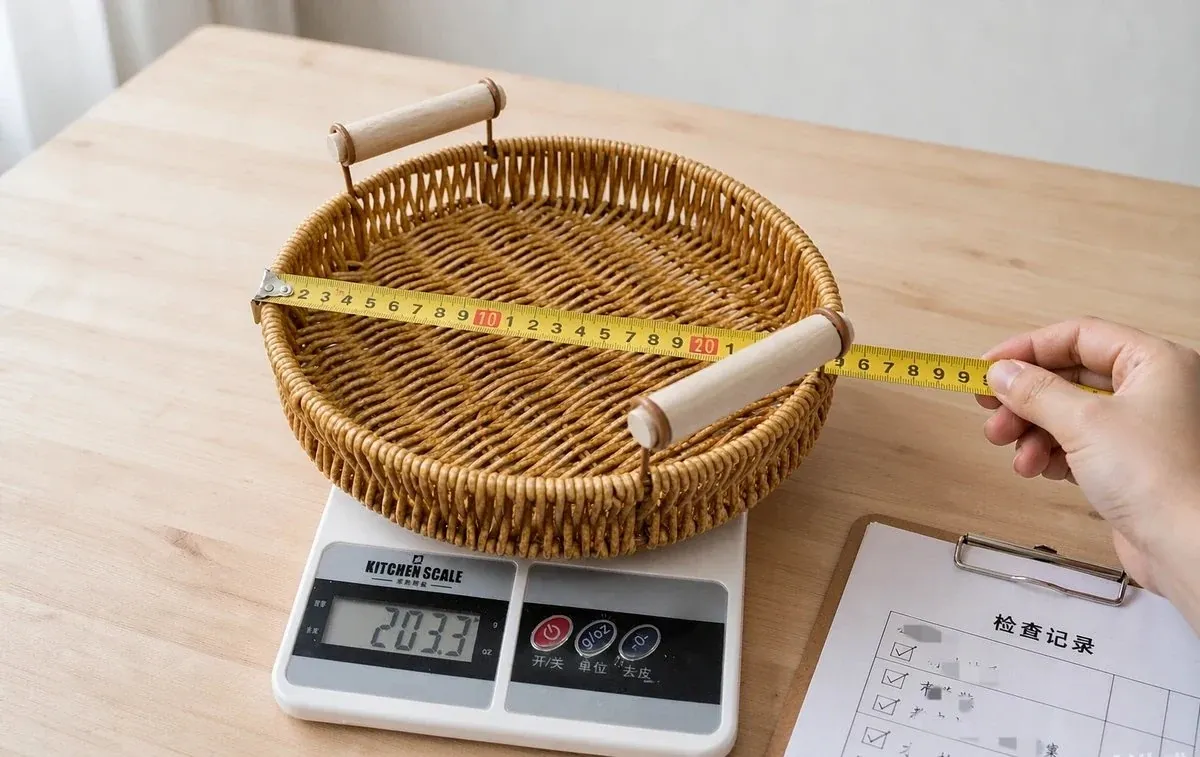
Every shipment is inspected before it leaves. We check the goods against the approved sample: size, weight, colour, construction and packing. You receive the findings as a photo report.
Two details that matter more than they look:
Measurement, not opinion. Size and weight are checked against numbers, not against someone's impression of whether a basket looks right.
Before shipment, not on arrival. Finding a problem in China costs a delay. Finding it at your warehouse costs a return, a replacement and a customer relationship.
This is not a certification and we do not present it as one. It is an inspection process, and you get to see the output. The material side of a specification is set out in our natural materials guide.
FAQ
How long does a full development project take?
Sampling runs 7 to 10 days after design confirmation. Bulk production and shipping depend on the product and quantity, and we give you the timeline with the quotation rather than after it.
Do I need to send a technical drawing?
No. A sketch, a photo or a written description is enough to start. We will come back with questions, and those questions are the first useful part of the project.
What is the minimum for a custom product?
100 pieces per colour, per design. Colour count is the variable that changes your total, so decide that early.
Can you copy a product I found elsewhere?
Bringing a reference is normal, and we will tell you what can and cannot be reproduced. What we will not do is copy another brand's protected design.
Do I own the specification?
The specification you develop with us is yours. We do not resell your design to another buyer.
Related products
Have a product idea and a target price? Send both. We reply within 24 hours with feasibility, an indicative price and the sampling timeline. → contact us · Or browse our collections first.
Lead times, documents and payment terms are covered on our FAQ page, and the materials we build in are listed under our 12 core materials.